
Check everyone is safe
Stop safely and deal with injuries or immediate danger. Call emergency services when appropriate. Do not continue driving a vehicle that may be unsafe.
If you have been involved in an Uber or Bolt accident while working as a private-hire driver, start with safety, insurer notification and an accurate record of your trip status. We explain who to report to, how vehicle repairs may be handled and what to check before using a replacement licensed PCO car.
Sterling can coordinate the vehicle side of an eligible claim, from evidence and recovery to repair progress and discussion of suitable replacement PCO vehicles.
Sterling Accident is independent and is not affiliated with Uber or Bolt. Claims, replacement vehicles, liability and costs are subject to eligibility, insurer and supplier decisions, availability and written terms.
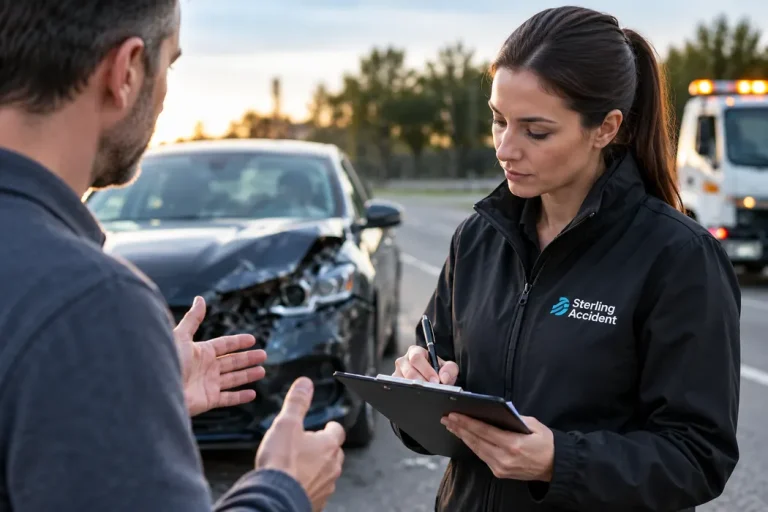
If you work through Uber or Bolt, an accident may create several separate tasks: making the road safe, reporting the incident to the appropriate insurer, following any operator or app reporting process, protecting trip evidence and arranging vehicle repair.
Not every collision occurs on an active booking. The stage of the journey and the type of insurance in force can matter. Keep a factual record of whether you were off duty, online and waiting, travelling to collect a passenger or carrying one. Do not assume platform-related insurance always applies.
Sterling focuses on the vehicle accident management process. The relevant insurer, licensing authority and platform retain their own reporting rules and decisions.
Your app status helps explain the circumstances, but it does not by itself determine whether your insurance will pay. Preserve the actual trip record and check the policy covering that use.
Save the time and location, confirm you were logged out and describe what the vehicle was being used for. Ask your motor insurer whether that particular use is covered under your policy; do not assume hire-and-reward terms apply when off duty.
Compare on-duty and off-duty use →Keep a screenshot or other evidence of when you were available for bookings and whether any trip had been accepted. Tell your insurer and operator you were online but not carrying a passenger. Being online does not itself establish who must pay.
Check who to notify →Keep the booking ID, acceptance and pickup times, route status and incident location. State clearly that you were travelling for an accepted booking and ask the relevant insurer to confirm how the policy applies.
Check who to notify →Check for injury and seek emergency help when needed. Save the trip reference, secure any lawful footage and notify the insurer and operator. Do not share passenger identity or medical details publicly.
Passenger-incident guidance →For examples of how working status can change the insurance enquiry, see the on-duty versus off-duty PCO accident guide.
Safety comes first. Then gather information that supports both the vehicle claim and any relevant reporting obligations.
Stop safely and deal with injuries or immediate danger. Call emergency services when appropriate. Do not continue driving a vehicle that may be unsafe.
Note the location, time, other vehicles, insurance details, witnesses and damage. Preserve available dashcam footage and take photographs if safe.
Follow your insurer’s notification requirements and the operator’s applicable incident process. Retain claim and platform reference numbers.
Keep the job reference, trip status and times where relevant. Avoid unnecessarily sharing passenger personal information.
Damage may affect both roadworthiness and private-hire licensing. Ask about recovery, inspection and repair rather than assuming a dented car can continue working.
Record why you need a suitable licensed vehicle, whether you have another car available, and the dates when your usual vehicle cannot be used for work.
Important: Your own insurance policy, operator requirements and licensing authority may require separate notifications. Sterling does not replace any of these reporting channels.
One accident may need several reports. Using an app’s incident tool does not notify your own insurer or fulfil any police or licensing duty.
| Contact | What to report or check |
|---|---|
| Emergency services or police | Call 999 for serious injury or immediate danger. Follow the legal duty to exchange details and report to police where required; GOV.UK explains the 24-hour police reporting rule when details were not exchanged. |
| Your motor insurer | Notify the insurer even if you believe another driver caused the accident and do not intend to claim under your policy. State the true app or booking status and keep the claim reference. |
| Uber, Bolt or other licensed operator | Use the operator’s current safety or incident reporting channel. Include the booking or trip ID if relevant and preserve its written acknowledgement. |
| Vehicle owner and licensing authority | If someone else owns or licenses the PHV, tell them promptly. London TfL guidance says a PHV owner must notify TfL within 72 hours of a collision affecting the vehicle’s safety, performance, appearance or comfort; it may need re-examination. Elsewhere, check the relevant council’s rules. |
Adapt the wording to your insurer or operator and submit it through its approved reporting channel. Remove personal passenger details that are not necessary.
Subject: Uber/Bolt private-hire vehicle collision — [date] / [reference]
I am reporting a collision involving vehicle [registration] on [date] at [time], near [location]. At the time I was [offline / online awaiting a trip / travelling to a pickup / carrying a passenger]. The relevant booking reference, if applicable, is [reference].
The vehicle is currently [roadworthy and secured / not safe to drive / awaiting recovery]. Emergency assistance, if required, has been requested. Please confirm the incident reference, relevant insurance procedure, evidence-upload method and any vehicle inspection or licence requirements before returning to private-hire work.
I can provide available photographs, third-party information and booking records through an appropriate secure channel. Please advise if you require anything further.
Kind regards,
[Driver name]
Official guidance: GOV.UK accident notification, TfL private-hire driver handbook (insurance and collision damage) and TfL licensing information. Check current conditions for the vehicle licence and the specific operator; not every deadline applies to every driver.
You can start Sterling’s report with the details you know. A claim reference and photos are not required at the outset; you can choose to send photographs after the call-back.
Report Your AccidentOur role is practical vehicle assistance, with responsibilities kept clear at every stage.
Submit the accident facts and vehicle location, even if photos are not available yet. Tell us the private-hire operator, true trip status and whether passengers were involved.
We look at driveability, location and claim eligibility. Recovery arrangements depend on circumstances and terms.
Assessment, repair estimates and authorisation progress can be followed, while the insurer or engineer retains the applicable decisions.
If you need temporary private-hire transport, we can review suitability and availability without promising a licensed substitute.
A replacement vehicle may be possible after an eligible accident, but a car that is merely driveable is not necessarily authorised for private-hire work. It is important to check the licensing position for the specific vehicle and driver, relevant hire-and-reward insurance, operator onboarding requirements and the supplier’s permission for the intended use.
If you normally carry passengers for paid bookings, tell Sterling at the beginning. Also explain whether you need wheelchair access, particular passenger capacity or any other essential equipment.
A non-fault claim can affect the possible route, but it does not guarantee a free car, acceptance by an app, immediate availability or reimbursement of lost earnings. For the full eligibility and hire discussion see Replacement PCO Vehicle.
London licensing note: TfL requires valid hire-or-reward insurance when a vehicle is used as a PHV. Its driver handbook says a PHV owner must notify TfL within 72 hours of a collision affecting the vehicle’s safety, performance, appearance or comfort. The car may need re-examination before carrying passengers again. Drivers who do not own the vehicle should notify its owner and confirm the applicable requirements. Other councils have their own rules.
Credit-hire and repair agreements: if a supplier provides a replacement car or repairs on credit, charges may be pursued from the responsible driver’s insurer. No upfront payment does not mean the arrangement is always free. If liability, hire rates or duration are disputed, you may be asked to help with recovery or become responsible for some charges under your contract. Get the written rates, return terms, insurance excess and any protection explained before signing. See Sterling’s credit-hire guide and Financial Ombudsman guidance.
Repair or hire decisions are separate from lost earnings. Document your actual trading position and vehicle downtime rather than assuming an average week’s gross fares will be paid.
Whether any earnings can be recovered depends on evidence, liability and the claim route; no particular amount is guaranteed. See PCO loss-of-earnings evidence and documents for a replacement PCO vehicle.
The correct route depends on the driving circumstances, insurance and liability evidence, not just which booking app you use.
Where another road user may be responsible, a vehicle claim can involve the third-party insurer, your own insurer and any relevant repair or accident-management provider. Keep your description factual and preserve the evidence.
Sterling can coordinate the vehicle work where the case qualifies; it does not decide liability, coverage or a legal settlement.
Uber and Bolt have their own driver support and incident processes. Use the relevant app or operator support channel and keep any confirmation. Separately check policy conditions with your insurer or broker.
Do not assume personal motor cover, private-hire insurance or a platform arrangement automatically covers every stage of a trip.
Uber’s UK Partner Protection insurance information describes benefits for eligible driver injuries, sickness and certain other events. Uber expressly states that this protection does not replace commercial motor insurance. It is not evidence that repairs to your car, a replacement PCO vehicle or third-party liability are covered.
Discuss the actual vehicle damage, hire-and-reward cover and claim route with your motor insurer or broker. Bolt and other operators may have different arrangements, so check the terms relevant to your own booking and vehicle.
Sterling can review the vehicle side of a reported accident and discuss qualifying recovery, damage assessment, repair management and replacement needs. Liability and any insurer recovery decision depend on the evidence and applicable terms.
No. Uber’s UK Partner Protection describes benefits for eligible personal events such as injury and sickness. Uber says it is not commercial motor insurance. Vehicle damage and road liability must be assessed under the applicable motor policy and claim circumstances.
Check everyone is safe, notify emergency services or police where required, record the damage and relevant trip details, and report the collision through Uber’s current Driver app incident process. Notify your motor insurer separately, even if you do not intend to claim, and check any licensing reporting duty.
No automatic entitlement should be assumed. Coverage and responsibility depend on the circumstances, the insurance arrangements, the stage of the journey and the relevant platform and policy terms. Report through the appropriate channels.
Keep an accurate record of your app and trip status at the time. This detail may be relevant to the insurer or operator. Do not change the status in your report to fit an assumed coverage outcome.
Potentially, but the vehicle must be suitable and lawfully authorised for private-hire work, with the necessary insurance, supplier permission and platform or operator acceptance. There is no guarantee of an identical or immediately available vehicle.
Loss-of-earnings recovery is not automatic and is not guaranteed by Sterling. Any possible claim depends on evidence, liability, the circumstances and the relevant legal or insurance route. Keep accurate records of actual work interruption.
Yes. You can begin with the accident facts and contact details; an insurer reference and photographs are not required initially. Select the photos-later option when needed, while separately fulfilling all insurer, operator and licensing notification duties.
No. Sterling Accident is an independent accident-management business. References to Uber and Bolt identify the types of drivers who may need help and do not indicate any partnership, approval or endorsement.
Yes. The accident must be notified to your own motor insurer even if you do not intend to claim. You may also need to follow police, private-hire operator and licensing requirements. Save separate reference numbers and report the actual trip status.
TfL’s PHV driver handbook says that if you own your London-licensed private-hire vehicle, you must tell TfL within 72 hours of a collision affecting its safety, performance, appearance or comfort. The vehicle may need re-examination. If you drive someone else’s PHV, notify the owner promptly and check the reporting duties that apply to them.
Not automatically. The replacement must meet the relevant private-hire vehicle licensing requirements, cover the named driver for hire-and-reward work, be permitted under the supplier agreement and be accepted by the licensed operator or platform. A private-use courtesy car is not necessarily lawful for passenger trips.
No free vehicle is guaranteed. Your policy, an offer from the third-party insurer and independent credit hire have different terms. Credit hire may involve no upfront payment but leave you responsible for disputed or unrecovered costs under the agreement, so check the rate, duration, excess and protection before signing.
Check everyone’s safety, obtain emergency help if necessary, follow the police and insurer reporting rules, and notify the booking operator. Save the trip ID and relevant original dashcam footage securely. Do not share passenger identities or footage publicly.
Yes. You can submit the initial accident details and vehicle location through Sterling’s online report without an insurer claim reference or photographs. If photographs are unavailable or unsafe to take, select the option to provide them after the call-back.
Tell Sterling what happened, where the vehicle is now and whether it can be used safely for licensed work. We can review qualifying recovery, repair coordination and appropriate replacement options without promising free hire, insurer approval or earnings compensation.