
Who was moving?
Record whether each vehicle was parked, reversing, turning or travelling along a marked route.
Home Car Accident Claims Car Park Accidents
Car park collisions and reversing claimsHad an accident while reversing, leaving a parking bay or driving through a car park? Record how both vehicles were moving, keep photos of the damage and layout, and report the circumstances. Sterling can help coordinate the evidence and eligible vehicle-claim steps while the responsible parties assess liability.
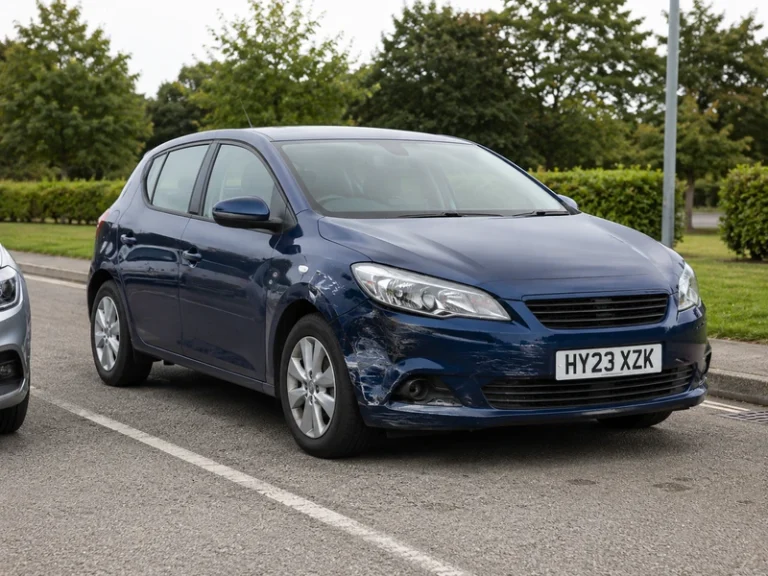
Car park accident claims often involve reversing, doors, bays, circulating lanes and limited visibility. Responsibility is not safely inferred from the size of the damage. A diagram, direction of travel and clear account of which vehicle was moving can be more useful than an argument at the scene.
This page is for collisions in supermarket, workplace, residential or other private parking areas, including bay exits and pedestrianised access lanes.
Record whether each vehicle was parked, reversing, turning or travelling along a marked route.
Photograph arrows, give-way markings, bay lines, pillars, barriers and sight restrictions.
Note any cameras or witnesses and contact the car park operator promptly about preserving footage. Access to recordings is not guaranteed.
The sequence protects people and evidence first, then moves the damaged vehicle when it is safe.
Avoid blocking access once positions and damage can be recorded safely.
Take driver, vehicle and insurer information even for low-speed contact.
Add arrows, bay numbers and fixed landmarks while the sequence is fresh.
Inspect steering, wheels, doors, lights, sensors and loose trim before driving.
Send the factual record for liability review and coordinate the vehicle work.
The location does not remove the need to exchange details or notify the appropriate insurer.
Photograph the vehicles, damage, bay markings and access lanes so the incident can be assessed in context.
Preserve the damage until the necessary insurer or engineer review is complete.
Responsibility boundary: The insurer or relevant third party evaluates responsibility. Sterling’s role is the vehicle evidence, qualifying recovery, assessment and managed repair route.
There is no automatic answer based only on the fact that one or both drivers were reversing. The movements of each vehicle, visibility, markings, witness accounts, photographs and any available footage may all matter. The relevant insurers or other responsible parties assess liability using the evidence.
A collision in a supermarket, residential or workplace car park can still be reported and considered as a vehicle claim. Exchange details where appropriate, notify your insurer as required and preserve evidence. Being on private land does not decide liability or guarantee a particular claim outcome.
Ask the car park owner or operator as soon as possible whether cameras cover the bay, access lane or exit, and request that relevant footage be preserved. Record the date, time, location and camera position. Footage may be unavailable or subject to access restrictions, so do not assume it will be supplied.
If it is safe, take close-ups of the damage and wider photographs showing both vehicles, bay numbers, road arrows, signs and fixed landmarks. Keep dashcam recordings, witness details and a simple sketch of each vehicle’s movement. Preserve damage for any required insurer or engineer assessment. Sterling coordinates eligible vehicle-claim steps; the insurer or relevant third party decides responsibility.
See how vehicle evidence, assessment, qualifying recovery and repairs can be coordinated from your first report.
View accident-claim guidanceExplore what may help establish responsibility when a driver reverses into you or a car park collision is disputed.
View non-fault guidanceUse the parked-car accident guide when your vehicle was stationary and the key evidence is a note, witness, timestamp or nearby camera.
View parked car accident guidanceSterling will review the vehicle position, explain the available coordination route and identify which organisation must make the next decision.