
Driveability evidence
Wheel position, leaking fluid, broken lights, glazing, airbags, warning lights and loose panels help determine the safe route.
Home Car Accident Recovery Claims
When recovery forms part of the vehicle claimRecovery treated as the first claim operation. The sections below identify the information needed to choose the next vehicle step.
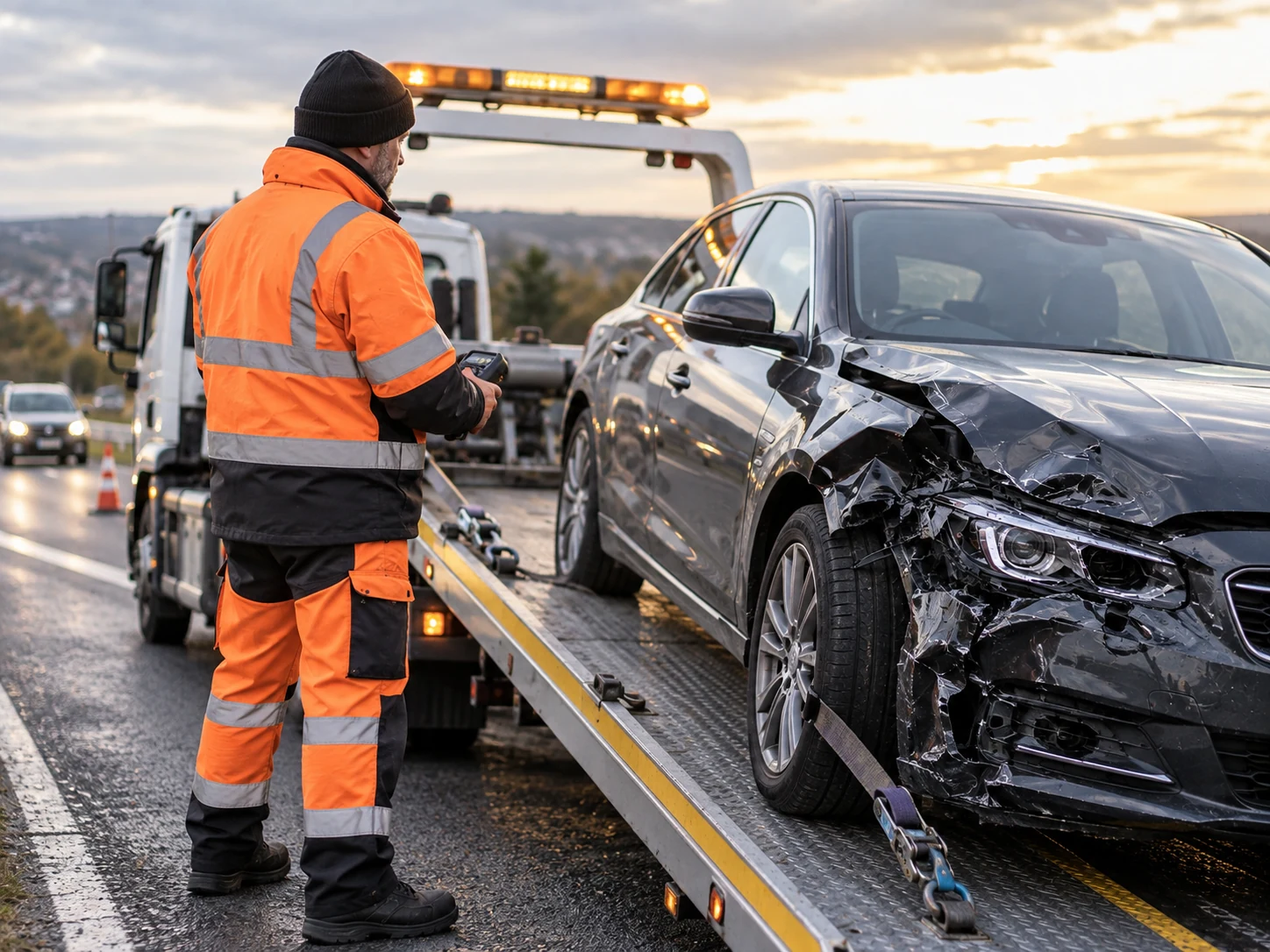
Car accident recovery claims begin with two linked questions: should the vehicle be moved, and under which claim or payment arrangement? Sterling can triage the condition, confirm whether free accident recovery applies to the qualifying claim and make sure collection information follows the vehicle into assessment.
This page is for a driver whose damaged vehicle is stranded, at home, in storage or otherwise unable to continue safely after a collision.
Wheel position, leaking fluid, broken lights, glazing, airbags, warning lights and loose panels help determine the safe route.
Exact location, keys, steering condition, parking height, gates and vehicle obstruction affect the recovery equipment and timing.
Storage, assessment and repair should have an agreed destination rather than an undefined collection.
Each step creates the record or decision needed to move the damaged vehicle forward.
Use emergency services or the relevant road authority where the scene remains dangerous.
Give specific damage and access information instead of simply saying it will not start.
Understand whether recovery is included for the qualifying claim or offered under another arrangement.
Keep the provider, time, destination, keys and visible condition noted.
Use the collection record for assessment, storage and repair coordination.
Sterling’s free-recovery wording relates to qualifying accident claims, not unrelated mechanical breakdown.
A vehicle moved without a recorded destination can attract delay and disputed charges.
Do not stand in live traffic to take photographs for the claim.
Responsibility boundary: Recovery eligibility, access and destination must be confirmed for the individual case; Sterling cannot promise universal free collection or an emergency response time.
Car accident recovery claims begin with two linked questions: should the vehicle be moved, and under which claim or payment arrangement? Sterling can triage the condition, confirm whether free accident recovery applies to the qualifying claim and make sure collection information follows the vehicle into assessment.
Prepare details covering driveability evidence, collection access, onward destination. Use emergency services or the relevant road authority where the scene remains dangerous. Give specific damage and access information instead of simply saying it will not start.
Sterling’s free-recovery wording relates to qualifying accident claims, not unrelated mechanical breakdown. A vehicle moved without a recorded destination can attract delay and disputed charges. Do not stand in live traffic to take photographs for the claim.
Recovery eligibility, access and destination must be confirmed for the individual case; Sterling cannot promise universal free collection or an emergency response time.
Continue the vehicle-claim route with the related information here.
View recovery guidanceCheck whether the recovery route is funded by policy cover, a qualifying Sterling arrangement or another authorised basis.
View recovery-cost guidanceContinue the vehicle-claim route with the related information here.
View accident-claim guidanceSterling will review the vehicle position, explain the available coordination route and identify which organisation must make the next decision.