
Home›Advice›Motorway accident guide
What to Do After a Motorway Accident: Safety, Recovery and Claims
A motorway collision can leave you and your passengers close to fast-moving traffic. Your first priority is to reach safety and get emergency help where needed—not photograph the vehicles or organise a claim.
Here is what UK drivers should do after a motorway crash, including live-lane and hard-shoulder situations, recovery arrangements, insurer reporting and the evidence to preserve once safe.
In immediate danger or if trapped in a live lane, call 999 and ask for the police. Sterling Accident is not an emergency service.
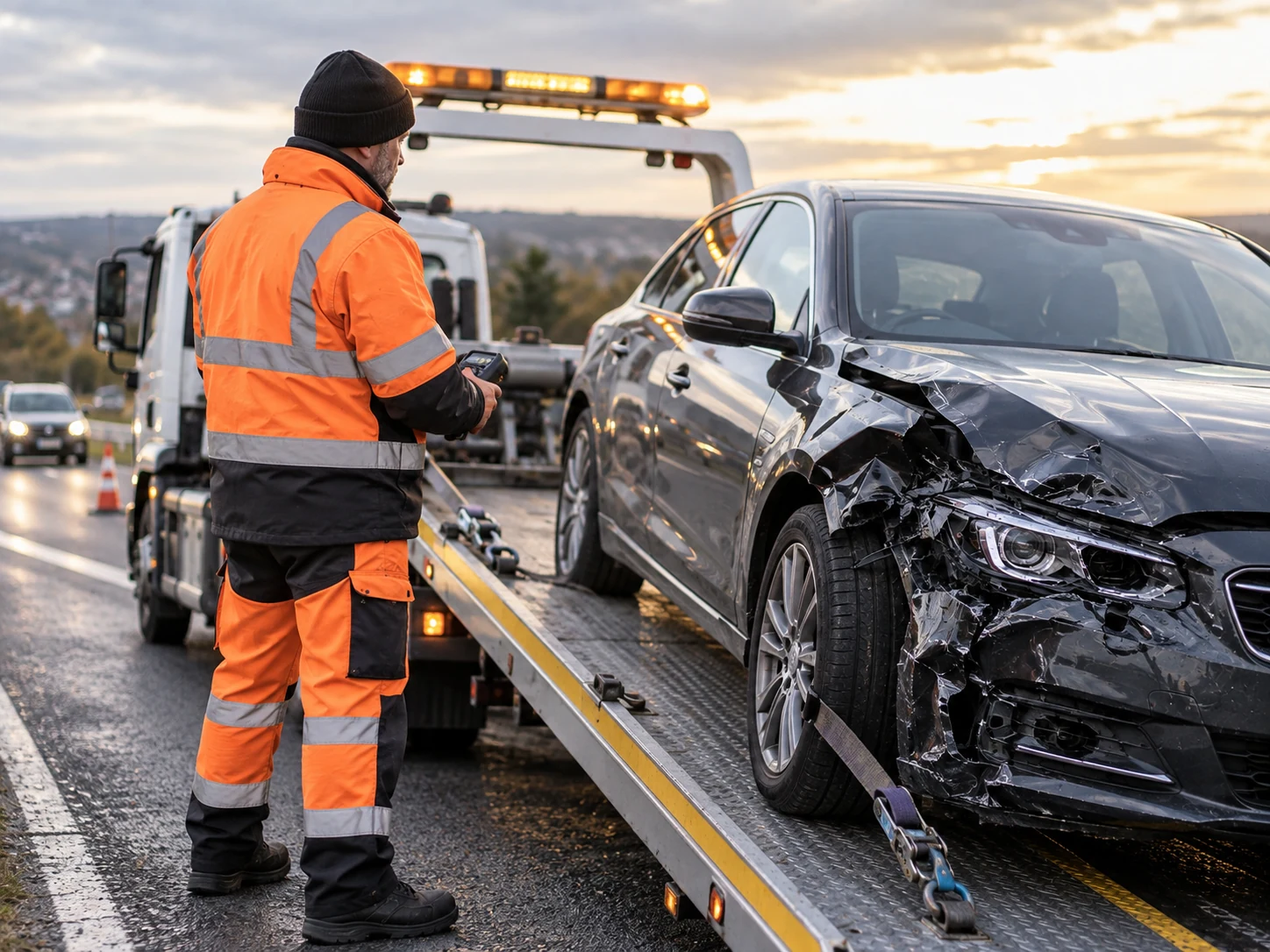
The correct first steps depend on whether you can reach a safe place, whether the vehicle can move, and whether you can exit away from traffic. The current Highway Code rules 275–287 distinguish these situations and emphasise keeping people away from moving traffic.
If this has just happened: do not continue reading on the motorway. Follow the emergency guidance, call 999 if you are in danger or someone is injured, and only deal with vehicle claims once the immediate risk has been addressed.
Six immediate steps after a motorway collision
- 1
Assess immediate danger and injuries
Check what you can without putting yourself at risk. Call 999 for injuries, a dangerous obstruction or an unsafe stopped vehicle, explaining that you are on a motorway and asking for the police where appropriate. Do not attempt a roadside assessment while traffic is approaching.
- 2
Move to a safer place if possible
If your vehicle is capable of moving safely, get into the left lane and aim for a service area or the next exit. If that is not possible, reach an emergency area or a hard shoulder where available, stopping as far left as you safely can. Do not drive a dangerously damaged vehicle just to reach an exit.
- 3
Use your hazard warning lights
Switch on hazard lights to warn other traffic. Use sidelights in poor visibility as indicated by the Highway Code. Do not go onto the carriageway to place warning devices.
- 4
Get people away from traffic if safe
If you can safely exit, leave on the side furthest from moving traffic and take passengers away from the vehicle; stand behind a barrier where available and safe. Watch for hazards beyond the barrier and do not return to the car while waiting.
- 5
Contact motorway assistance
Use the emergency telephone where available to explain your location and obtain advice. If you cannot get to a safe place or cannot exit safely, remain inside with your seat belt and hazards on, and call 999 immediately for police assistance.
- 6
Deal with the claim after the scene is safe
Follow the police or traffic officer’s instructions, then arrange recovery if needed, notify your insurer and preserve available evidence from a safe location. Sterling can discuss eligible vehicle-claim coordination once emergency needs are handled.
Never place a warning triangle on a motorway. The Highway Code specifically advises against it. Do not attempt repairs at the roadside or walk through live traffic to retrieve belongings or debris.
Official reference: The Highway Code, rules 275, 277, 279 and 283.
What if your car stops in a live motorway lane?
If you cannot move left to a place of relative safety and cannot leave the vehicle safely, stay inside, keep your seat belt fastened, leave your hazard warning lights on, and call 999 immediately for the police. The Highway Code specifically covers this combination of risks under Rule 277.
Do not assume you must get out of the car in every situation. Stepping into live motorway traffic can be more dangerous than staying belted in while emergency assistance is arranged. Follow instructions from the police and emergency services.
If someone is injured
Call 999 and report the number of vehicles, approximate location, whether traffic is obstructed and any suspected injuries. Do not move injured people from a vehicle unless they are in immediate danger. Give first aid only within your training and when doing so is safe.
If you cannot exit due to disability or mobility needs
Rule 279 advises disabled drivers unable to follow ordinary exit advice to remain belted in, keep hazard lights on and call 999 immediately, or use the vehicle SOS function to request police help. Explain any accessibility needs to the operator.
Do not return to your stopped vehicle from a safe position to collect photos, bags or documents. The car and property can be dealt with after the emergency response.
What changes on a motorway without a permanent hard shoulder?
Some motorways have sections without a conventional hard shoulder or where it is used as a running lane at certain times. Emergency areas are marked with blue SOS signs and may have an orange road surface. They are reserved for emergencies.
When your vehicle develops a problem, move left if you can and use the next appropriate emergency area. If you cannot reach it and the vehicle is immobile in a live lane, use the stay-belted-in and 999 approach rather than attempting an unsafe crossing to the verge.
Emergency area
Stop only for an emergency. To rejoin the motorway from an emergency area, Highway Code Rule 278 says you must use the emergency telephone and follow the operator’s advice. A lane may need to be closed first.
Hard shoulder
Use only when permitted in an emergency or under the relevant signals. Stop as far left as practicable and keep people well away from moving traffic. It is not a safe location to wait beside the vehicle.
Obey overhead lane signals and red X signs. The rules for motorway lane closures and stopping matter even when congestion makes other lanes appear slow.
Sources: Motorways, Rules 269–271 and Rules 277–279.
Who arranges recovery after a motorway accident?
If the car cannot be driven safely, vehicle recovery may be required. The police or motorway traffic officers may need to deal with a hazardous location or obstructed carriageway before an ordinary recovery operator can attend.
Tell the emergency services or recovery provider the motorway name and direction, nearby junctions, marker post details, whether the vehicle is in an emergency area or live lane, and whether anyone remains inside. Do not ask a civilian recovery operator to enter an unsafe live carriageway without the appropriate traffic management.
Who pays is a separate matter: it may depend on your breakdown or motor policy, who arranged the work, the accident circumstances and any later decision on liability. A non-fault description does not itself guarantee that all recovery, storage or onward movement charges will be reimbursed.
What information helps the vehicle recovery process?
- The exact motorway, travel direction, junction numbers and available marker post or driver-location sign details.
- Vehicle registration, type, damage and whether wheels, steering or suspension may be affected.
- Where the police or traffic officers directed the vehicle to be recovered or stored.
- Whether the keys are available and if there are access restrictions.
- Any insurer claim reference and contact details for the responsible case handler.
Once the scene is secure, Sterling may be able to coordinate qualifying vehicle-side arrangements through its accident recovery service. See also who pays for accident recovery and recovery of a non-driveable vehicle.
Sterling is not a motorway emergency response service. For immediate danger or a collision obstructing high-speed traffic, call 999. Emergency services and road authorities control the safety response.
How to report a motorway accident to insurance
Once the immediate danger is over, notify your insurer through its required process, even if you do not intend to claim. Keep the account factual rather than deciding who was at fault before the evidence has been reviewed.
Under Highway Code Rule 286, a driver involved in a collision causing specified damage or injury must stop, provide required details to an entitled person, and report to police as soon as reasonably practicable and within 24 hours if the required name and address were not given at the scene. If someone is injured, additional insurance documentation and reporting duties can apply under Rule 287.
On a live motorway, do not risk your safety to exchange paperwork at the point of impact. Follow emergency instructions, then exchange details when you can do so safely, or report the collision as required.
What evidence should you keep?
- Dashcam footage in its original format, saved before it is overwritten.
- Vehicle damage photographs taken only from a safe location after the incident.
- Time, motorway direction, junction or marker location, weather and visibility.
- Other vehicle registration, driver and insurance details, witnesses and any police reference number.
- Recovery paperwork, storage location, repair assessment and hire or transport agreements.
Claims can involve different decisions: the insurer or appropriate party considers liability, an assessor considers vehicle damage, and a repairer or recovery supplier handles its own agreed work. See Sterling’s accident reporting guide and car accident claims page for the standard next steps.
Official guidance: Highway Code Rules 283 and 286–287; Police.uk road collision reporting.
Can you drive home after a motorway collision?
Not if the vehicle may be unsafe or unroadworthy. A damaged tyre, wheel, steering component, fluid system, restraint system or lighting can pose a serious risk even if the engine starts. Follow any instructions from police or traffic officers and seek appropriate professional assessment where necessary.
If the vehicle is declared safe to move, follow the proper motorway instructions for its location. An emergency area has a specific controlled procedure for rejoining the carriageway; do not pull straight out without contacting the emergency telephone operator.
If recovery and repairs mean you cannot use your own car, ask about any policy courtesy-car provision or other eligible mobility solution. Replacement vehicle eligibility, hire terms and availability must be checked rather than assumed. For more detail, read Sterling’s replacement vehicle guide.
Motorway accident FAQs
Should I get out of my car after a motorway accident?
Only if you can safely exit away from moving traffic and reach a safe position. If you cannot move the car to a place of relative safety and cannot safely leave it, stay belted in, keep your hazards on and call 999 immediately for police assistance.
What if my car stops in the middle lane of a motorway?
If it cannot be moved and you cannot safely exit, remain in the vehicle with your seat belt and hazard lights on and call 999 immediately. Do not cross live traffic lanes to reach a verge.
Can I put a warning triangle behind a crashed car on a motorway?
No. The Highway Code explicitly says not to place a warning triangle on a motorway. Use hazard lights and follow the proper emergency safety procedure instead.
How can I tell emergency services where I am?
Give the motorway number, direction of travel, nearby junction and any driver-location sign or marker post reference. A motorway emergency telephone can also help identify your location.
Is the motorway hard shoulder safe to wait on?
A hard shoulder is a place of relative safety, but it remains close to high-speed traffic. If safe, leave the vehicle on the side furthest from moving traffic and wait well away, behind a safety barrier where possible. Stay alert for other hazards.
What should I do in a motorway emergency area?
Use it only in an emergency. When it is time to rejoin, the Highway Code says you must use the emergency telephone and follow the operator’s advice. An unsafe or damaged vehicle may need recovery instead.
Who pays for motorway accident recovery?
It depends on your policy, the recovery arrangements, the claim circumstances and relevant contractual terms. Any costs initially paid or later recovered must be confirmed; there is no blanket guarantee of free recovery.
Do I need to report a minor motorway collision to the police?
The reporting duties depend on injury, exchanged details and possible offences. If required information was not given at the scene, Rule 286 requires a police report as soon as reasonably practicable and within 24 hours. Follow emergency instructions and notify your insurer under its policy terms.
Need help with a motorway accident-damaged car?
Once you and any passengers are safe and the emergency response has been completed, Sterling can review eligible recovery, damage assessment, repairs and replacement-vehicle arrangements.