
Home›Car accident claims›Proving a Car Accident Claim Without Witnesses or Video
Proving a Car Accident Claim Without Witnesses or Video
You can still report and pursue a collision claim when no one saw the crash and neither vehicle has dashcam footage. The challenge is reconstructing a credible account from road markings, physical damage, contemporaneous records and what each driver says.
General UK vehicle-claims information. Insurance cover, liability, eligibility and any financial recovery depend on your policy, agreement and evidence.
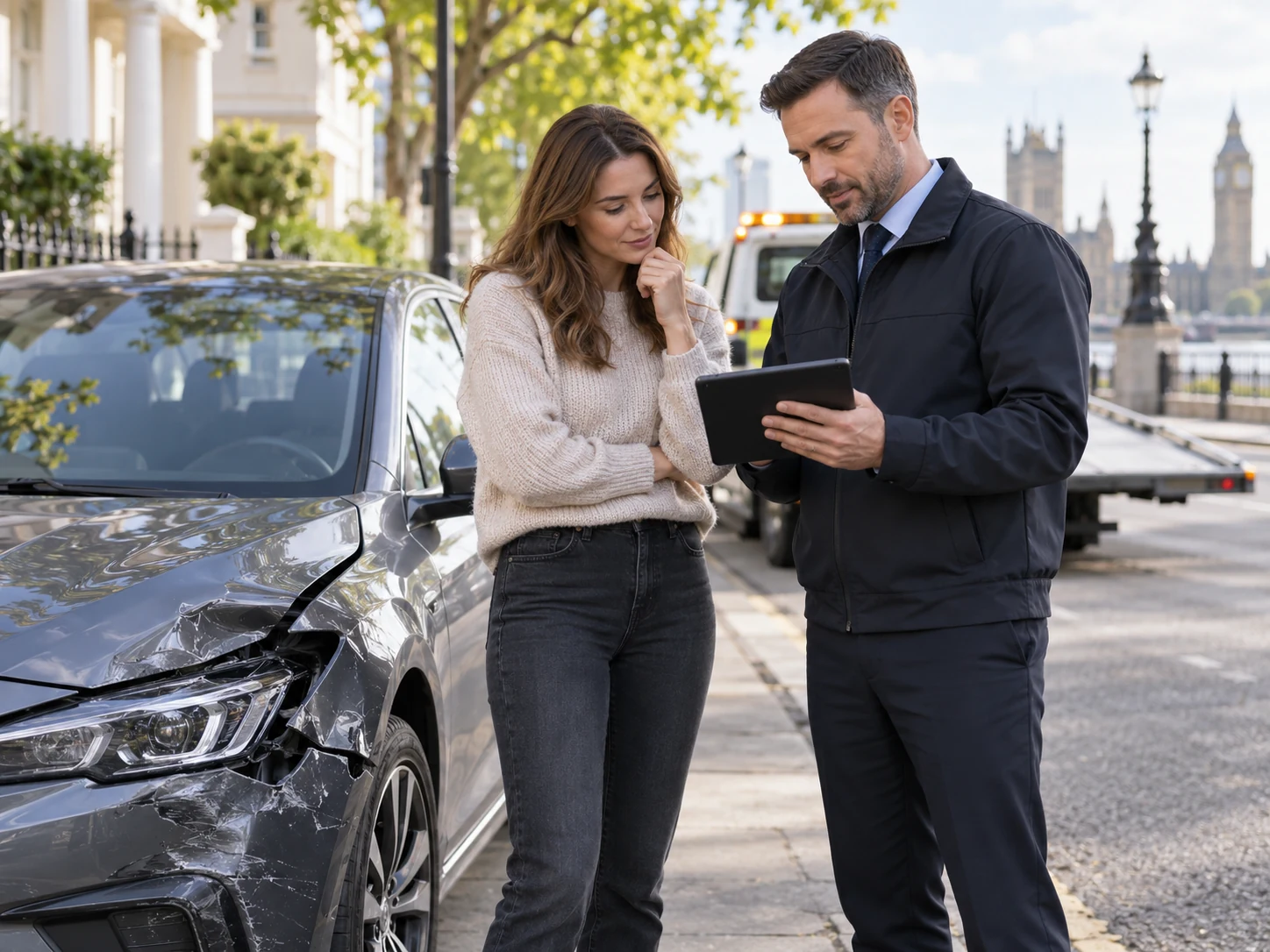
You can still report and pursue a collision claim when no one saw the crash and neither vehicle has dashcam footage. The challenge is reconstructing a credible account from road markings, physical damage, contemporaneous records and what each driver says.
Can you prove fault without an independent witness?
Yes, sometimes. An insurer does not automatically reject a claim solely because there is no CCTV, dashcam or independent witness. It must assess the information reasonably available, although contradictory accounts may leave genuine uncertainty.
Do not confuse the ability to make an insurance claim with guaranteed success against the other driver. Comprehensive cover might respond to your own insured damage even where fault remains disputed, subject to policy terms and excess.
- Your written account close to the time of the crash
- Photos of vehicle positions and all visible damage
- Road markings, signs and lighting conditions
- Police, recovery and garage records
- Any messages exchanged between drivers
What evidence can replace camera footage?
A useful sketch can show each vehicle’s lane, direction and approximate point of impact. Photograph signs and junction approaches if it is safe to return; do not recreate a dangerous scene while standing on a road.
Engineers can compare damage areas and repair records. A prompt repair report may show damage that would become less obvious if the vehicle were repaired. An independent witness is valuable, but a repairer is not necessarily an eyewitness to the accident.
Keep a timeline of when you called police or the insurer, what each person said and when the car was moved. Contemporary records can support consistency without falsely proving an unseen event.
What happens when the other driver’s account conflicts with yours?
Both insurers may seek statements, photographs, damage reports and further investigation. One account can be more credible, or they may conclude that the evidence is insufficient to establish full responsibility on one side.
Do not assume an automatic 50/50 result. Split liability depends on the facts, available material and settlement terms. Read our 50/50 liability explanation before accepting what a proposed split means.
Most motor policies permit the insurer to settle a liability dispute as it considers reasonable; ask it to explain how it used the evidence and what it recorded on your claim.
What about damage discovered later?
Take initial photographs before any repairs and keep the garage’s later findings. Damage that was not visible at the roadside may emerge after dismantling, but the insurer can still question whether it resulted from the reported event.
If the collision involved parked vehicles, obtain dated parking, access and location records where legitimate. Avoid inventing witnesses or relying on unauthorised access to nearby cameras.
If the insurer unfairly rejects your version
Request the claims handler’s reasoning, ask whether it has compared both vehicle damage reports, and point out any factual error. Explain specifically what records support your version.
A complaint to your own insurer may be appropriate if the investigation was unreasonable. The Financial Ombudsman reviews whether the insurer handled a dispute fairly rather than determining road-accident liability as a court would.
Five steps to take
- 1
Write a factual sequence and simple
Write a factual sequence and simple diagram while memories are fresh.
- 2
Preserve all safe scene, damage and
Preserve all safe scene, damage and vehicle position photographs.
- 3
Collect police references, phone records and
Collect police references, phone records and garage or recovery paperwork.
- 4
Report the event to the insurer
Report the event to the insurer and provide every legitimate piece of supporting evidence.
- 5
Request written reasons if the insurer
Request written reasons if the insurer disputes your account; correct factual errors promptly.
Keep your written record: note the claim reference, person contacted, decision and dates. Do not assume another party has accepted liability or costs until confirmed.
Proving a Car Accident Claim Without Witnesses or Video: FAQs
Will insurance pay if nobody witnessed my accident?
It may, subject to your cover and the insurer’s assessment. A lack of witnesses is not an automatic refusal, though it can make fault hard to establish.
Can I win a claim with only my statement?
Sometimes, but a statement’s credibility and consistency matter; other evidence may be needed when accounts conflict.
Do photographs prove who caused a crash?
They can show damage, position and road layout, but rarely establish the whole sequence without context.
Do both drivers automatically get 50/50 liability?
No. Insurers assess available evidence and may accept full, shared or disputed liability depending on the circumstances.
Can a garage confirm who was at fault?
A repairer may explain damage patterns but is not normally an eyewitness to how the accident occurred.
Should I report the crash if no one has evidence?
Yes. Notify your insurer under the policy requirements even if you think you will not be able to establish blame.
Can I use a police incident reference as proof of liability?
No. It supports reporting but does not alone prove how the collision occurred.
What if my insurer won’t investigate properly?
Ask for its decision and evidence basis and use its complaint process if you believe its handling was unreasonable.
Need help after an accident?
Sterling Accident can discuss qualifying vehicle recovery, damage assessment, authorised repairs and temporary mobility. It cannot guarantee liability decisions, insurer payments or contractual outcomes.