
Home›Car accident claims›Accident with a Passenger in Your Private Hire Car: What Next?
Accident with a Passenger in Your Private Hire Car: What Next?
A collision while carrying a paying passenger in a taxi or private-hire vehicle creates extra responsibilities. First protect everyone, arrange medical and emergency help when needed, and follow the correct commercial motor insurance, operator and applicable licensing reporting processes.
General UK guidance. Actual legal duties, insurance payment and specialist vehicle arrangements depend on the circumstances, policy and agreement.
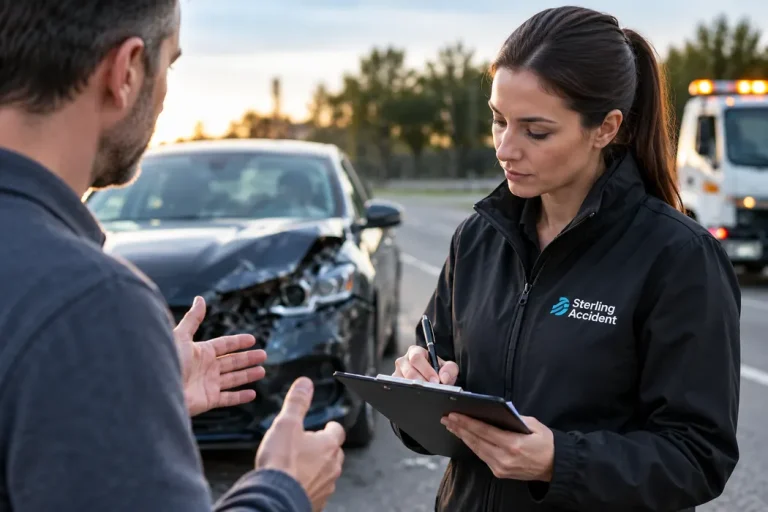
If you have an accident with a passenger in your private-hire car, put safety first. Stop, check for injuries, arrange emergency help when needed and record the booking and collision. Notify your hire-and-reward insurer and the private-hire operator; check separately whether police and licensing notifications are required.
Passenger injury issues should be referred to the appropriate insurer or qualified adviser. Sterling Accident focuses on qualifying vehicle recovery, repairs and licensed replacement arrangements rather than personal-injury compensation.
What should a private-hire driver do immediately?
Stop and make the scene safe as far as possible. Check on the passenger and anyone else involved; call 999 if someone is seriously injured or there is immediate danger. Do not move an injured person unless necessary to prevent further danger, and follow emergency-services instructions. Never continue a paid journey in a vehicle that may be unsafe.
Exchange legally required driver and owner information with other parties, and record the accident location, time, vehicle positions and registration numbers. Avoid discussing legal fault or encouraging a passenger to make a particular statement.
Follow GOV.UK accident-reporting guidance and Highway Code rules 286–287. If you cannot provide the required details at the scene, you must report the collision to the police as soon as reasonably practicable and within 24 hours. Additional police reporting and insurance-evidence duties can apply where another person is injured. Do not treat 24 hours as permission to delay. If appropriate, ask the operator to arrange safe onward travel for an uninjured passenger.
Who must be informed about the passenger incident?
Notify the insurer that actually covers paid private-hire use for that journey. You may also need to report the collision to the licensed operator or app platform using its incident procedure and to the relevant licensing authority under licence conditions.
Requirements and time limits vary by the local licensing body, operator, insurer and whether the driver is a London TfL PHV licensee or licensed elsewhere. Check the actual conditions rather than assuming a universal 24-hour operator or council deadline.
If there is an injury or a statutory reason to contact the police, comply with the police reporting duty independently of an app report. Do not assume that a reported trip incident automatically notifies your insurer or licensing authority.
Who to notify after a collision with a passenger on board
| Who | When and why to contact them |
|---|---|
| Emergency services and police | Call 999 for immediate danger or a serious medical emergency. The law also requires police reporting in certain circumstances, including if required details are not exchanged; further duties apply after injury where insurance evidence is not produced. Do not assume an operator report fulfils a police duty. |
| Your motor insurer | Notify the insurer covering the actual vehicle and journey, even if you are not making a claim. Explain that a fare-paying passenger was on board and identify the booking status; follow the policy’s notification requirements. |
| Private-hire operator or app | Use the operator’s collision or safety reporting route for the booked trip. Report any interrupted journey, injuries you know about and onward-travel needs, without guessing about liability. |
| Vehicle licence holder and licensing authority | Tell the vehicle owner or licence holder where different from you. Check applicable TfL or local council conditions for damage notification, inspection, licence status and any restrictions before the vehicle returns to paid work. |
Official references: GOV.UK accident and insurer reporting; Highway Code incident rules 286–287; TfL taxi and private-hire licensing. Licence deadlines depend on who holds the vehicle licence and which authority applies.
What information should you preserve about the trip?
Keep the booking reference, operator name, trip start and destination, the approximate journey stage, dashcam where lawful, accident photographs, witnesses and communications sent to the operator.
Only share passenger identification, contact and medical information where needed by a legitimate insurer, emergency responder or authorised claims handler, using a secure process. Passenger safety and privacy both matter.
Do not post identifiable passenger footage online or disclose a passenger’s medical details to unrelated drivers or customers.
What to record without exposing the passenger’s private information: the operator booking reference, date and time, booked-trip status, pickup and destination area, journey stage, vehicle registration, collision location, other vehicles, witnesses and a neutral description of any injury or assistance provided.
Preserve original incident messages and any lawful dashcam footage promptly, because systems can overwrite it. Restrict access to identifiable passenger information and send it securely only to people authorised to handle the incident. The ICO’s vehicle-surveillance guidance explains the privacy obligations.
What insurance issues differ on a booked journey?
A paying passenger generally places the trip within hire-and-reward use, so the cover for that activity is crucial. A private-use motor policy cannot be assumed to cover booked passenger transport.
Do not assume an app platform’s contingent protection replaces your commercial policy; check the actual policy wording, named-driver status and whether the booked journey was covered. If the passenger reports an injury or later makes a claim, promptly forward the communication to the relevant insurer without admitting liability or offering a private cash settlement. Whether an injury claim is payable depends on the facts, applicable cover and law.
For UK licensing and appropriate private-hire insurance, see GOV.UK private-hire vehicle insurance and inspection requirements. Where your car must be replaced, do not assume a courtesy car is automatically authorised for passenger bookings.
For broader distinctions see PCO on-duty versus off-duty insurance.
What if your PCO car is damaged and cannot work?
The vehicle may need recovery, an engineering assessment and insurer-authorised repairs. A replacement must be suitably licensed and insured for paid private-hire work before transporting passengers.
Keep accurate shift, trip, income and repair or recovery records if financial losses are assessed separately. Before using any replacement for paid journeys, check the replacement vehicle licence, hire-or-reward insurance and operator approval. Sterling coordinates eligible vehicle services but cannot guarantee passenger injury settlements, platform acceptance or payment of lost earnings. See the replacement PCO vehicle guide and PCO loss-of-earnings evidence checklist.
Sterling can review qualifying vehicle recovery, assessment, repairs and licensed replacement needs. Tell us the vehicle location, operator and whether anyone needs urgent assistance. We do not decide passenger injury liability or guarantee compensation.
Report the AccidentWhat happened during the passenger journey?
Choose the situation that best fits your collision to see the immediate reporting and vehicle steps. Check your actual insurer, operator and licensing requirements; this guide does not determine fault or compensation.
Check the passenger’s safety, call 999 for serious injury or immediate danger, and follow the applicable police reporting and insurance-evidence rules. Notify the hire-and-reward insurer and operator promptly. Keep a neutral incident record and pass any passenger injury claim to the appropriate insurer or adviser.
Check who must be informed →Exchange the required information, keep the booking reference and relevant evidence, notify the insurer even if you will not claim, and report the event to the operator. Check police and licensing duties separately; injuries may become apparent later.
Review the evidence checklist →Arrange suitable recovery and assessment. Notify the insurer and licensed operator, then check TfL or council conditions before returning the car to service. Any replacement must have the correct vehicle licence, named-driver hire-and-reward cover and operator approval before taking bookings.
Check replacement PCO options →Five steps to take
- 1
Protect passengers and anyone injured
Stop safely, assess injuries and call 999 where there is serious injury or immediate danger. Do not continue the booked journey in an unsafe car.
- 2
Exchange details and log the trip
Record the accident location and time, vehicles, witnesses and booking reference. Exchange legally required details while keeping passenger data private.
- 3
Notify the insurer and operator
Tell the insurer covering the hire-and-reward journey, and report the passenger incident through your licensed operator or app’s procedure.
- 4
Check licensing and police reports
Confirm any police reporting duty and the vehicle licence holder’s TfL or council reporting obligations. Keep written reference numbers and acknowledgements.
- 5
Arrange safe recovery and licensed replacement
If your car cannot work, coordinate recovery and authorised repairs. Before accepting fares in a substitute, verify its licence, hire-and-reward cover and operator acceptance.
Keep written records: note the date, decision and party responsible. Do not rely on unconfirmed costs or legal conclusions when continuing a claim.
Subject: Private-hire passenger journey collision — [date] / [booking reference]
I am notifying you that my private-hire vehicle was involved in a collision during a booked passenger journey on [date] at approximately [time], near [location]. My vehicle registration is [registration] and the operator booking reference is [reference].
The vehicle’s current condition is [safe to move / recovery needed / under assessment]. Emergency or passenger assistance provided, if applicable, has been reported through the appropriate secure channel. Please confirm the reference number, next reporting steps, insurance requirements and any licensing or vehicle inspection arrangements that apply.
Please advise where I should securely submit photographs, booking records and any relevant witness details. I will provide further factual information as it becomes available.
Kind regards,
[Driver name]
Private-hire accident with a passenger: FAQs
Should I contact the police if a passenger is injured?
Seek urgent medical help when needed. An injury can trigger specific legal requirements to produce evidence of insurance or report the accident. Under the Highway Code, if the required insurance evidence is not produced at the scene, report to the police as soon as possible and within 24 hours, and follow the relevant rules on providing evidence afterwards. If required details were not exchanged, separate reporting duties also apply.
Do I need to report an Uber or Bolt accident to the app?
Follow the relevant platform’s trip incident reporting procedure as well as your insurer’s duties.
Does private insurance cover a paying passenger journey?
Do not assume ordinary private-use motor insurance covers paid PHV journeys. Check a valid hire-and-reward policy covering the driver, vehicle and relevant booked trip. A passenger injury claim should be referred to the appropriate insurer and assessed on its facts.
Should I share passenger details with the insurer?
Only relevant necessary details through a legitimate secure process.
What if the passenger later reports an injury?
Forward the claim to the relevant insurer or qualified claims adviser promptly.
Can I carry passengers in a courtesy car?
Not unless the specific vehicle and driver meet private-hire licensing, insurance and operator rules.
Does a driver always owe the passenger compensation?
Not automatically. Liability and applicable insurance are assessed from the facts and law.
Will Sterling handle passenger injury compensation?
No. Sterling coordinates qualifying vehicle-side support and does not provide passenger personal-injury representation or decide compensation.
Is there a universal 24-hour deadline to report a private-hire accident?
No. Police reporting obligations can require action as soon as reasonably practicable and within 24 hours in specified circumstances. Your insurer, operator and licensing authority may have different notice requirements. In London, TfL’s rules can differ depending on whether you are the driver or vehicle licence holder. Check the rules that apply to you.
What if my passenger needs medical help or the journey cannot continue?
Prioritise their safety, call emergency services when necessary and give accurate information to responders. If safe and appropriate, contact your operator to arrange the passenger’s onward travel. Record what assistance was provided without speculating about injuries or liability.
Can I use in-car camera footage of the passenger as evidence?
Relevant footage may be useful, but recordings of identifiable passengers are personal data. Preserve it securely, follow the operator’s privacy and retention rules, and disclose it only where there is a lawful basis and a genuine need. Do not post it publicly.
Can I claim lost PCO earnings after an accident with a passenger?
Lost earnings may be assessed separately depending on liability, evidence and claim arrangements. Keep booking, shift and income records, along with dates your car was not usable. Recovery is not guaranteed, and Sterling does not decide compensation.
Is a passenger covered by insurance in a private-hire car accident?
Private-hire vehicles need appropriate insurance for carrying paying passengers, but the response to any particular passenger injury claim depends on the policy, circumstances and legal liability. Notify the insurer covering the booked journey and refer injury allegations or requests for compensation to it; do not promise payment.
What if the passenger later complains to Uber, Bolt or another operator?
Preserve the booking reference, collision details, original messages and relevant footage lawfully. Follow the operator’s safety or incident process and promptly forward any liability allegation or compensation demand to the appropriate insurer. Avoid sharing identifiable passenger information beyond those who need it.
Do I have to tell my insurer if the passenger says they are uninjured?
Yes. GOV.UK says to report an accident to your own motor insurer even if you do not intend to claim. An absence of obvious injuries does not remove your insurance notification duty; make sure the insurer knows the vehicle was being used for a booked hire-and-reward journey.
Is your private-hire car damaged after a passenger accident?
Report the vehicle location, incident circumstances and operator details. Sterling can review qualifying recovery, assessment, authorised repairs and licensed replacement vehicle needs. Passenger injury claims and liability remain with the appropriate insurer or advisers.