
Home›Car accident claims›Who Is at Fault in a Lane-Changing Car Accident?
Who Is at Fault in a Lane-Changing Car Accident?
A sideswipe, motorway merge or collision while changing lanes often raises a dispute about who moved into whose path. The driver changing lanes needs to check the move is safe, but liability is assessed from all drivers’ actions and the actual evidence—not a blanket rule that every lane-change claim is 50/50.
General UK guidance. Actual legal duties, insurance payment and specialist vehicle arrangements depend on the circumstances, policy and agreement.
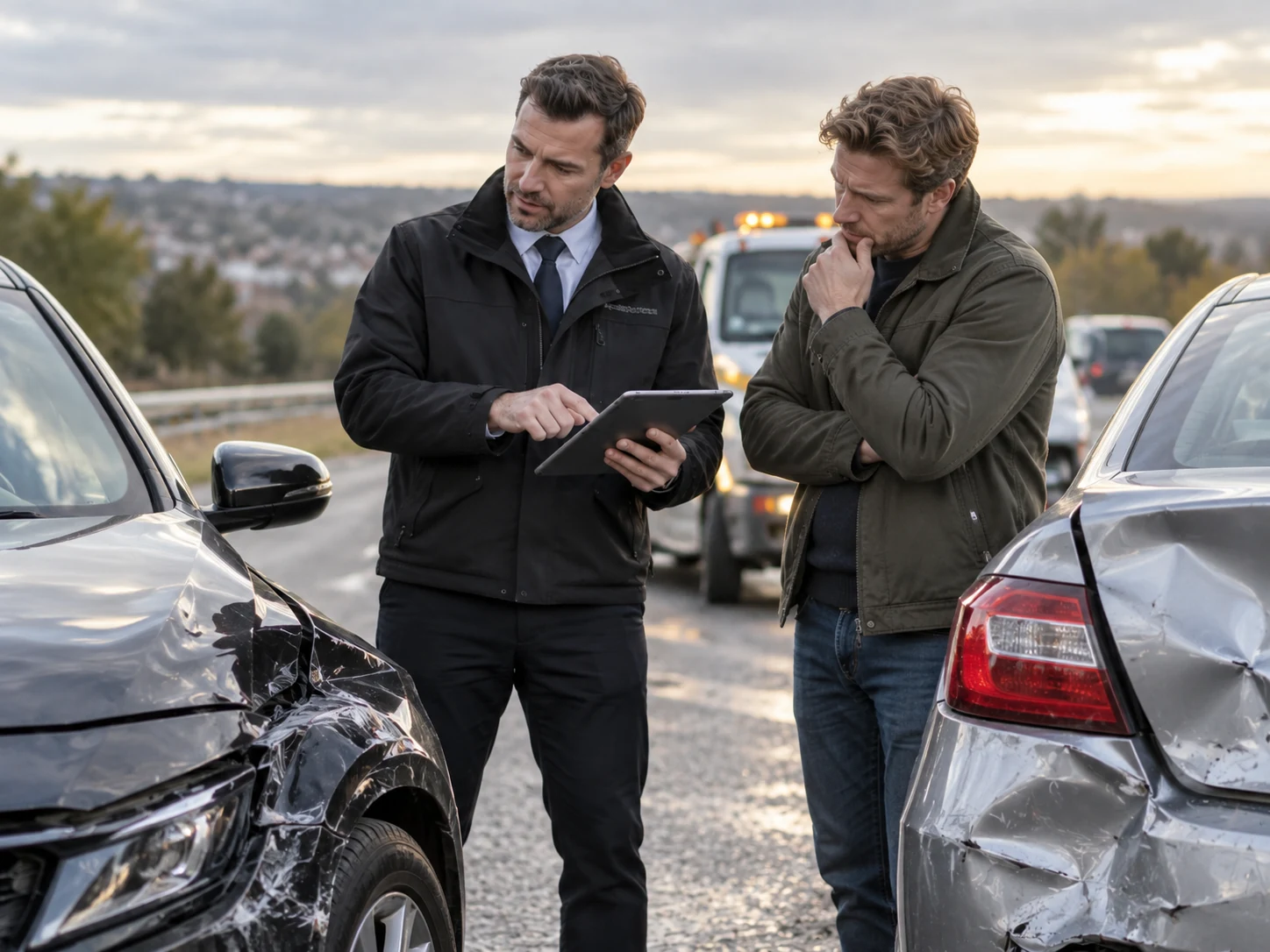
A sideswipe, motorway merge or collision while changing lanes often raises a dispute about who moved into whose path. The driver changing lanes needs to check the move is safe, but liability is assessed from all drivers’ actions and the actual evidence—not a blanket rule that every lane-change claim is 50/50.
What does the Highway Code require before changing lanes?
The Highway Code’s lane discipline rules require motorists to use mirrors, check blind spots where necessary, signal appropriately and move only when safe. A signal warns of an intended manoeuvre; it does not grant automatic priority.
Rule 133 addresses checking whether a lane change is safe. Rules 134–136 discuss lane use, merging and conditions where drivers must be alert to changing traffic. Road markings and temporary restrictions can also matter.
Always assess the road layout, lanes, visibility and timing rather than asserting that whichever car had its indicator on was entitled to move.
- Mirror and blind-spot observations
- Vehicle positions before crossing the lane line
- Actual signals and time given to other drivers
- Lane arrows, markings and temporary traffic controls
Who is at fault in a typical sideswipe accident?
If a driver moves across a lane boundary and strikes a vehicle properly travelling in the adjacent lane, the moving driver’s failure to check may support liability. It is still important to establish precisely who moved and whether the other driver took reasonable care.
At a merge, the driver joining traffic generally must do so safely, but excessive speed, a last-minute lane movement or an unsafe reaction by another driver may also be relevant. Do not treat a motorway slip road as giving its joining vehicle automatic right of way.
Damage to the sides of two vehicles can indicate contact points, but not necessarily their direction of movement.
Can both drivers be partly responsible?
Yes, depending on evidence of each driver’s contribution. For example, one driver might have moved without checking while the other changed speed abruptly or failed to react to a developing hazard.
That does not make 50/50 a default insurance outcome. Ask the insurer for the facts and policy basis of a proposed split. Our 50/50 liability guide explains why administrative claim status and civil responsibility are not identical.
What evidence is most useful after a lane-change collision?
Preserve original dashcam footage covering several seconds before contact, including vehicle position against road markings. Collect safe photographs of the damaged sides and wider road layout, plus independent witness contact details.
Write a simple diagram of each vehicle’s lane, direction, signals and approximate movement. Where available, road camera footage or a garage’s damage inspection can supplement the account, but should not be treated as a guaranteed answer.
Never edit original recordings or reconstruct details you did not actually observe.
What if an insurer blames you unfairly?
Ask for its written explanation and which account, road markings, footage or independent evidence informed the decision. Submit any missing evidence and correct factual inaccuracies precisely.
Most policies allow an insurer to make reasonable settlement decisions; the Financial Ombudsman can review an eligible complaint about the fairness of its investigation. It does not act as a court to decide every collision’s precise fault.
Five steps to take
- 1
Act safely
Move to safety, check for injuries and exchange legally required details.
- 2
Check the requirements
Record both cars’ lanes, the road markings, the point of contact and any signals you actually saw.
- 3
Keep the evidence
Preserve complete dashcam footage, photographs and independent witness details.
- 4
Obtain written approval
Notify your insurer promptly with a factual diagram and the original evidence.
- 5
Confirm the outcome
Request written liability reasons and challenge specific factual mistakes rather than accepting a blanket split.
Keep written records: note the date, decision and party responsible. Do not rely on unconfirmed costs or legal conclusions when continuing a claim.
Who Is at Fault in a Lane-Changing Car Accident?: FAQs
Is the driver changing lanes always at fault?
No, but changing lanes requires a safe gap and proper observation. Liability is fact-specific.
Does signalling give a car priority to change lanes?
No. A signal does not give permission to move when unsafe.
Who is at fault when two cars move into the same lane?
The timing, road markings, awareness and actions of both drivers must be assessed.
Is a sideswipe automatically 50/50 liability?
No. A liability split must be supported by the facts or relevant settlement, not by the collision type alone.
Is merging from a slip road different?
The joining driver must merge safely; the other vehicles’ speed and actions can still be relevant.
Can side-panel damage prove who moved first?
It can help, but damage alone may not establish the full direction and sequence of movement.
Will dashcam footage settle the case?
It may be helpful but camera angle, clarity and missing context can limit what it proves.
Can I dispute the insurer’s finding?
You can request reasons and submit evidence, then complain to your own insurer if it handled the matter unfairly.
Need help with accident-damaged transport?
Sterling Accident can coordinate qualifying recovery, assessment, authorised repair and temporary mobility needs. Insurance and liability decisions remain with the relevant parties.