
Home›Car accident claims›Fleet Accident Reporting Checklist for Company Drivers
Fleet Accident Reporting Checklist for Company Drivers
A company driver involved in a collision should focus first on safety, then preserve the vehicle, third-party and incident details needed by the employer’s fleet manager and insurer. A consistent fleet reporting checklist helps avoid lost evidence, repair delays and confusion about who may authorise costs.
Actual insurance and licensing duties, employment rights or financial recovery depend on the policy, contract, authority and facts.
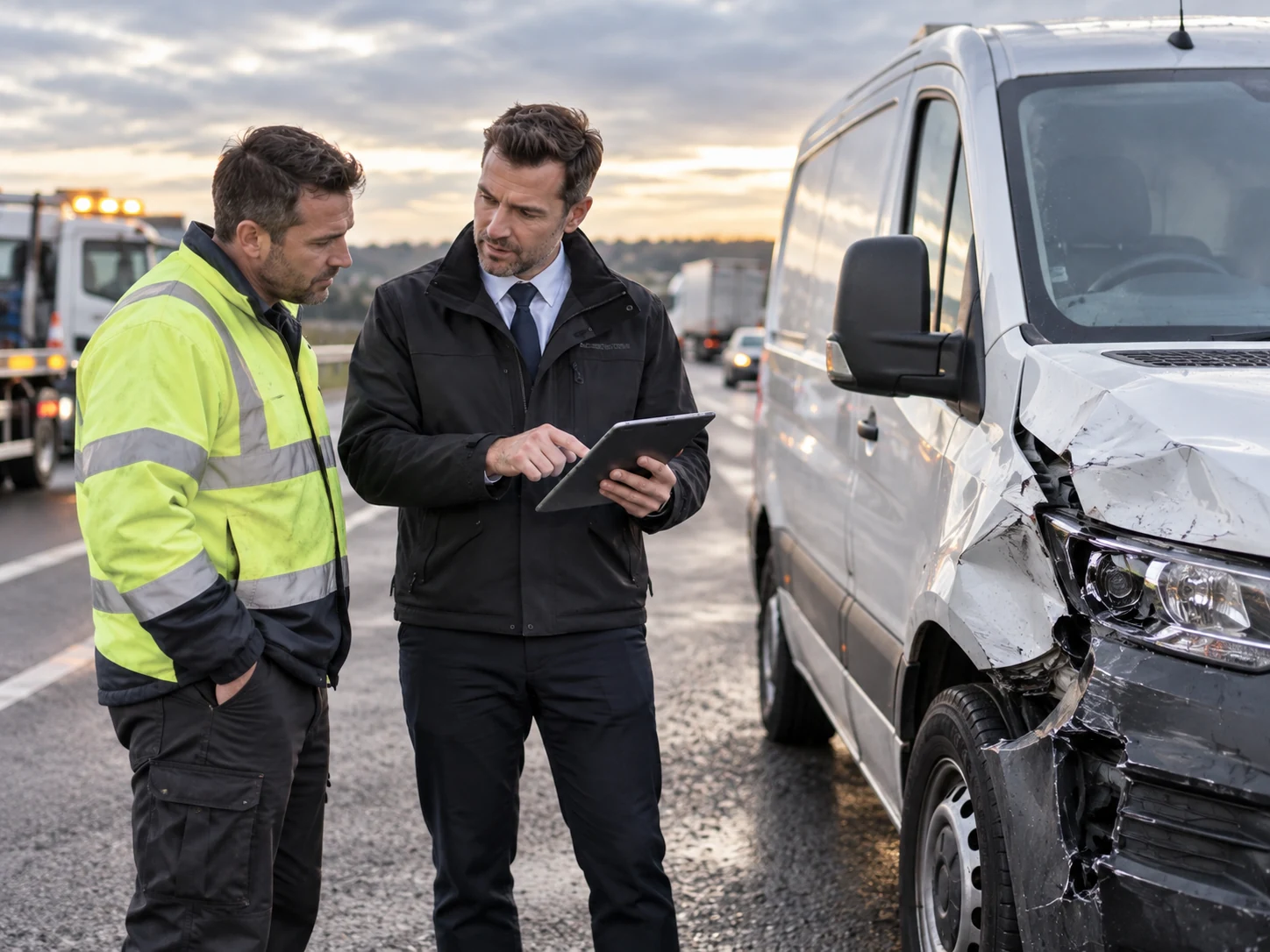
A company driver involved in a collision should focus first on safety, then preserve the vehicle, third-party and incident details needed by the employer’s fleet manager and insurer. A consistent fleet reporting checklist helps avoid lost evidence, repair delays and confusion about who may authorise costs.
What should a driver do at the accident scene?
Stop, check for injuries, secure the scene and call emergency services where necessary. Follow legal duties to exchange required driver, vehicle and owner information and contact the police where mandated.
Company vehicles are often registered to an employer, lessor or fleet provider. Record the actual owner or fleet contact details rather than guessing. Keep everyone away from live traffic while taking any photographs.
GOV.UK explains the accident requirements at vehicle insurance after a collision.
What information belongs in a fleet accident report?
Record vehicle registration and identifier, driver, date, time, road and exact location, description, directions of travel, third parties, witnesses, injury information, dashcam reference and photographs.
Also document vehicle driveability, recovery location, damage, load or equipment risks and any immediate business interruption. Use a secure company form that limits personal data to people who need it.
A simple timeline is useful: collision, first notification, recovery, inspection, repair authorisation and vehicle return.
Who should receive the report?
Notify the employer’s designated fleet manager, motor insurer or broker and relevant employer safety contact according to company procedure. In a leased or managed fleet, the vehicle provider may require separate notice.
The employer’s internal deadline can be stricter than a statutory police requirement; check the applicable policy and company handbook. Do not assume that reporting to a line manager also reaches the claims team.
Follow applicable occupational reporting rules where injuries or work-related incidents make them relevant; a road-traffic collision does not automatically fall into every workplace reporting category.
How should fleet telematics and dashcam files be handled?
Preserve unedited original footage and relevant telematics exports before retention periods overwrite them. Note device clocks and any data gaps.
Share driver, passenger and GPS information through authorised work systems with suitable privacy safeguards. Avoid circulating identifiable collision footage in staff group chats where unnecessary.
A useful report distinguishes what the video actually shows from opinions about fault.
What happens after the initial report?
The fleet manager should confirm whether the vehicle is safe, who instructs recovery, which insurer authorises repair and what temporary fleet transport can be arranged. Keep supplier estimates and approval dates.
If a commercial vehicle is off-road, record the business tasks lost or diverted and the actual substitute costs. See our commercial downtime evidence guide.
Five practical steps
- 1
Address immediate safety
Stop safely, assist injured people and follow police and statutory requirements.
- 2
Notify the correct people
Use the company report to capture all vehicles, witness and scene information.
- 3
Gather and check the evidence
Notify the fleet manager and insurer or broker through approved channels promptly.
- 4
Confirm responsibilities in writing
Preserve dashcam/telematics, recovery and repair records securely.
- 5
Keep a final record
Track authorisations, hire or substitute vehicles and return-to-service dates.
Keep a clear paper trail: record policy and licence references, decisions, dates, actual costs and who approved the next action. Do not invent accident details or financial figures.
Fleet Accident Reporting Checklist for Company Drivers: FAQs
Should a company driver report minor damage?
Follow the company’s incident procedure and motor policy requirements even when no immediate claim is planned.
Who files the fleet insurance claim?
The employer, fleet manager, broker or appointed claims handler may administer it; follow the company’s procedure.
Does the driver still exchange legal details?
Yes, applicable road traffic duties remain relevant when driving a company vehicle.
Can managers rely on WhatsApp photographs only?
A formal report and secure retention of original files is safer than scattered messages.
Should telematics data be saved?
Yes, where relevant, authorised and handled consistently with workplace data protection rules.
What if the van is unsafe to drive?
Arrange authorised recovery and do not use it until an appropriate roadworthiness assessment.
Who authorises accident repairs?
The fleet or insurer arrangement determines the appropriate party; avoid unauthorised chargeable work.
Can Sterling coordinate fleet claims?
Sterling may review qualifying vehicle-side support, subject to actual contract, availability and authorisation.
Need vehicle support following a collision?
Sterling can discuss qualifying recovery, assessment, authorised repair and replacement transport options. It cannot guarantee a business-income claim or the outcome of an insurer decision.